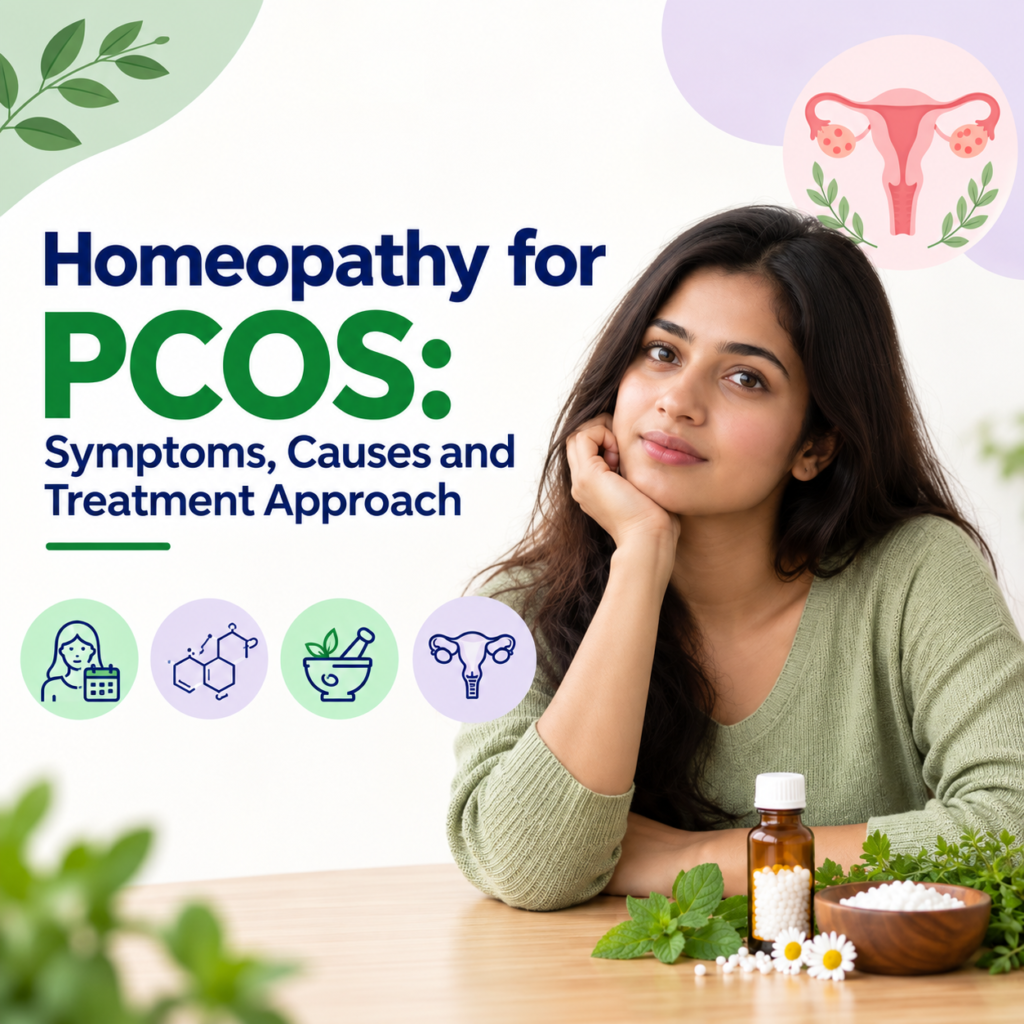
Polycystic Ovary Syndrome (PCOS) is a common hormonal and metabolic condition that can affect menstrual cycles, ovulation, skin, hair growth, weight and fertility. Since PCOS symptoms can vary from one woman to another, treatment and management should be personalized.
Many women searching for homeopathy for PCOS are looking for an individualized approach to symptoms such as irregular periods, acne, unwanted facial hair, weight changes and fertility concerns. Homeopathic care may be considered as a complementary approach, but proper diagnosis and medical evaluation are important before starting any treatment.
At PK Homeocare, Dr. Naincy focuses on understanding the patient’s symptoms, menstrual history, lifestyle and overall health before developing an individualized care approach.
PCOS, or Polycystic Ovary Syndrome, is a hormonal condition that can affect ovulation and menstrual cycles. It may also be associated with increased androgen activity and metabolic changes.
PCOS is not only an ovarian condition. It can affect reproductive health, metabolic health, fertility and overall quality of life. Not every woman with PCOS will experience the same symptoms, and having polycystic-looking ovaries is not necessary for every PCOS diagnosis.
PCOS symptoms can vary from person to person. Common symptoms include:
Some women may experience only a few symptoms, while others may experience several at the same time.
There is no single cause of PCOS. It is a complex condition involving hormonal, metabolic and genetic factors.
Increased androgen activity can interfere with normal ovulation and may contribute to acne, unwanted hair growth and scalp hair thinning.
Some women with PCOS have insulin resistance, which can affect blood sugar regulation and may be associated with increased androgen activity.
Hormonal changes can interfere with regular ovulation, resulting in irregular periods and fertility difficulties.
A family history of PCOS or related metabolic conditions may increase the likelihood of developing PCOS.
PCOS diagnosis involves more than simply finding cysts on the ovaries. A healthcare professional may consider menstrual history, symptoms, signs of increased androgen activity, blood tests and ultrasound when appropriate.
Other conditions that can cause irregular periods or similar symptoms may also need to be ruled out. Therefore, professional evaluation is important before starting treatment for PCOS.
Women often search for homeopathic treatment for PCOS because they prefer an individualized approach to managing their symptoms.
During a homeopathic consultation, factors such as menstrual patterns, duration of symptoms, acne, unwanted hair growth, hair fall, weight-related concerns, sleep, stress, digestion, medical history and fertility goals may be discussed.
At PK Homeocare, Dr. Naincy takes an individualized approach based on the patient’s overall symptoms and health history.
However, there is currently insufficient high-quality evidence to establish homeopathy as a cure for PCOS. Therefore, homeopathy should not replace necessary medical evaluation, monitoring or evidence-based treatment.
There is no established evidence that homeopathy can cure PCOS permanently. PCOS is generally considered a long-term condition that may require ongoing management.
The goal of PCOS management is usually to address individual concerns such as irregular periods, acne, unwanted hair growth, metabolic health and fertility.
Women considering homeopathy for PCOS should discuss their treatment choices with a qualified healthcare professional, particularly if they are taking other medicines or trying to conceive.
Lifestyle management is an important part of PCOS care. Depending on individual needs, healthcare professionals may recommend:
Lifestyle changes should be individualized according to a person’s health, preferences and treatment goals.
Irregular periods are one of the common symptoms associated with PCOS. However, irregular menstruation can also occur because of thyroid problems, stress, changes in weight and other hormonal or reproductive conditions.
For this reason, women with irregular periods should not assume that PCOS is the only possible cause. Proper evaluation can help identify the underlying condition.
PCOS can affect ovulation and may make conception more difficult for some women. However, having PCOS does not mean that pregnancy is impossible.
Women who are trying to conceive should discuss their fertility goals with a qualified healthcare professional. Depending on the individual situation, fertility treatment may include lifestyle management, medicines to support ovulation or other fertility treatments.
Homeopathy should not be used as a replacement for appropriate fertility evaluation or treatment.
You should consider seeking professional medical advice if you experience:
Early evaluation can help identify PCOS and rule out other conditions that may cause similar symptoms.
Homeopathy may be considered by some patients as a complementary approach, but there is insufficient high-quality evidence to establish homeopathy as an effective cure for PCOS.
PCOS is generally managed rather than permanently cured. Treatment depends on symptoms, reproductive goals and overall health.
Women may seek homeopathic care for irregular periods, but the cause of irregular menstruation should first be properly evaluated.
Yes. PCOS can affect ovulation, but many women with PCOS can become pregnant with appropriate management and fertility care.
Not necessarily. PCOS can occur in women with different body sizes. Management should focus on overall health and individual needs rather than weight alone.
There is no single treatment that is suitable for every woman with PCOS. Treatment depends on symptoms, reproductive goals, metabolic health and individual needs.
PCOS can cause irregular or absent ovulation, which may make conception more difficult. However, PCOS does not mean that pregnancy is impossible.
PCOS can affect different aspects of a woman’s health, and symptoms may change over time. A personalized assessment can help understand the individual’s concerns and determine an appropriate care approach.
Dr. Naincy at PK Homeocare can evaluate the patient’s symptoms, menstrual history, lifestyle factors and overall health concerns before recommending an individualized approach.
If you are experiencing irregular periods, acne, unwanted hair growth, weight-related concerns or fertility difficulties, seek professional guidance rather than self-treating based only on symptoms.
PCOS is a complex hormonal and metabolic condition that requires individualized assessment and long-term management. Homeopathy for PCOS may be explored as a complementary approach, but it should not replace proper diagnosis, medical monitoring or evidence-based treatment.
With appropriate professional guidance, healthy lifestyle habits and regular follow-up, women with PCOS can work toward better management of their symptoms and overall health.
Homeopathy may be considered as a complementary approach for managing individual PCOS-related concerns. However, there is not enough high-quality evidence to confirm homeopathy as a cure for PCOS.
Women may seek homeopathic care for irregular periods, but it is important to first identify the underlying cause of irregular menstruation and confirm whether PCOS is present.
PCOS is generally considered a long-term condition that can be managed. Treatment focuses on individual symptoms, reproductive goals and overall health.
Yes. PCOS can affect ovulation and make conception more difficult for some women, but many women with PCOS can become pregnant with appropriate care.
If you are considering combining treatments, discuss it with your qualified healthcare professionals. This helps ensure that necessary medical care and monitoring are not delayed or interrupted.
Dr. Naincy at PK Homeocare can assess your symptoms, menstrual history and overall health concerns to understand your individual needs and discuss an appropriate care approach.