
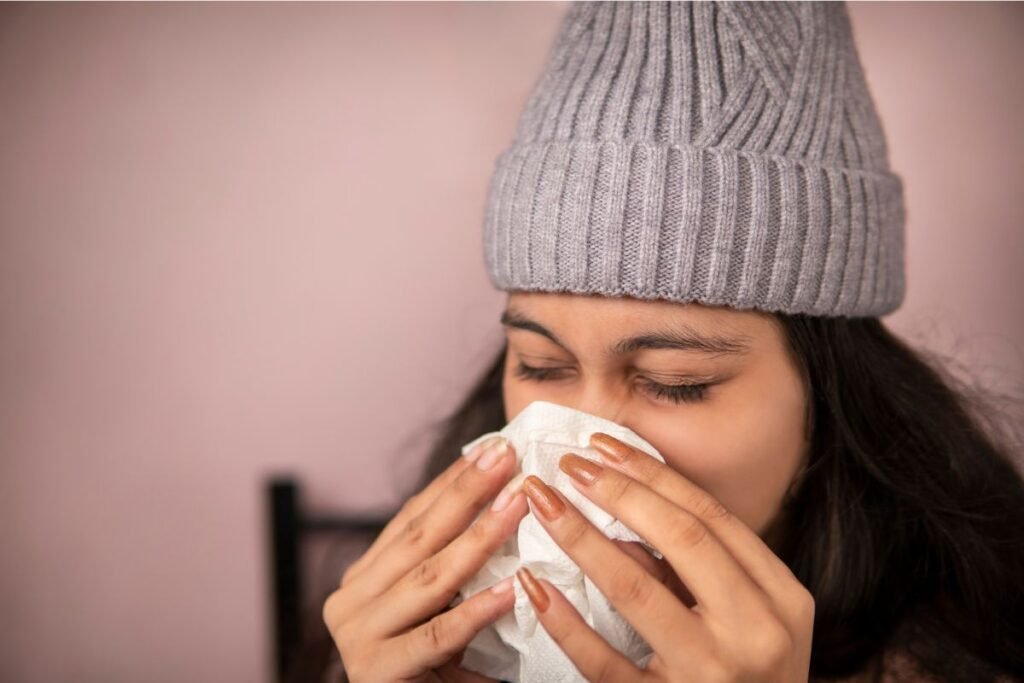
Sneezing and runny noses are very common problems during the winter season. Many people suffer from continuous sneezing, watery or blocked nose, throat irritation, and discomfort as soon as the weather turns cold. These symptoms may look mild initially, but when they keep returning, they affect daily life, sleep, and work productivity. In most cases, people remain confused about whether the problem is an allergy or an infection. Sneezing and runny noses in winter is often a sign of weak immunity, increased sensitivity to cold weather, or repeated exposure to allergens and infections.
Cold air, dry weather, indoor dust, and reduced sunlight during winter make the nasal passages more sensitive. If not managed properly, this condition can become recurrent every winter.
During winter, the body’s immune system becomes weaker due to reduced exposure to sunlight, which lowers Vitamin D levels. Cold and dry air irritates the nasal lining, making it easier for viruses and allergens to trigger symptoms. People also spend more time indoors, increasing exposure to dust, smoke, and infections. Because of these factors, Sneezing and Runny Nose in Winter becomes more frequent and long-lasting.
The symptoms of allergy and infection often overlap, which causes confusion. Allergies occur when the immune system overreacts to triggers like dust, cold air, smoke, or pollution. Infections are caused by viruses or bacteria affecting the respiratory tract. Identifying the cause of Sneezing and Runny Nose in Winter is important because treatment differs for both conditions.
Observing the nature and duration of symptoms helps in understanding the cause. Common symptoms include:
If symptoms last for weeks without fever, allergy is more likely. If fever and weakness are present, infection may be the cause.
Homeopathy treats both allergy-related and infection-related nasal problems by strengthening the immune system. Instead of suppressing symptoms, homeopathic treatment works on the root cause. In cases of Sneezing and Runny Nose in Winter, homeopathy helps reduce nasal sensitivity, improve immunity, and prevent frequent recurrence.
Homeopathic medicines are selected based on individual symptoms, triggers, and overall health condition. This personalized approach ensures long-term relief and better resistance to seasonal problems.
Homeopathy focuses on correcting internal imbalance rather than providing temporary relief. It strengthens the respiratory system, improves digestion, and reduces hypersensitivity to cold air and allergens. With regular treatment, the frequency and intensity of Sneezing and Runny Nose in Winter gradually decrease, and the body adapts better to seasonal changes.
Children are more prone to sneezing and runny nose during winter because their immune systems are still developing. Repeated episodes can disturb their sleep, appetite, and school routine. Homeopathy is especially suitable for children because it is gentle and safe.
With proper homeopathic care, children fall sick less often during winter.
Healthy winter habits play an important role in managing Sneezing and Runny Nose in Winter. Keeping the body warm, avoiding cold food and drinks, maintaining indoor cleanliness, staying hydrated, and eating warm, nutritious meals help reduce symptoms. Avoiding dust, smoke, and sudden exposure to cold air further prevents irritation.
These lifestyle measures work effectively along with homeopathic treatment.
Sneezing and runny nose during winter should not be ignored, especially when symptoms keep returning. Sneezing and Runny Nose in Winter can be due to allergy, infection, or weak immunity. Homeopathy offers a natural, safe, and effective approach by treating the root cause, strengthening immunity, and preventing recurrence. With personalized homeopathic care and simple lifestyle support, both adults and children can enjoy better respiratory health throughout the winter season.